Stop Dumping. Start Sandwiching.
28 June 2026 · 5 min read
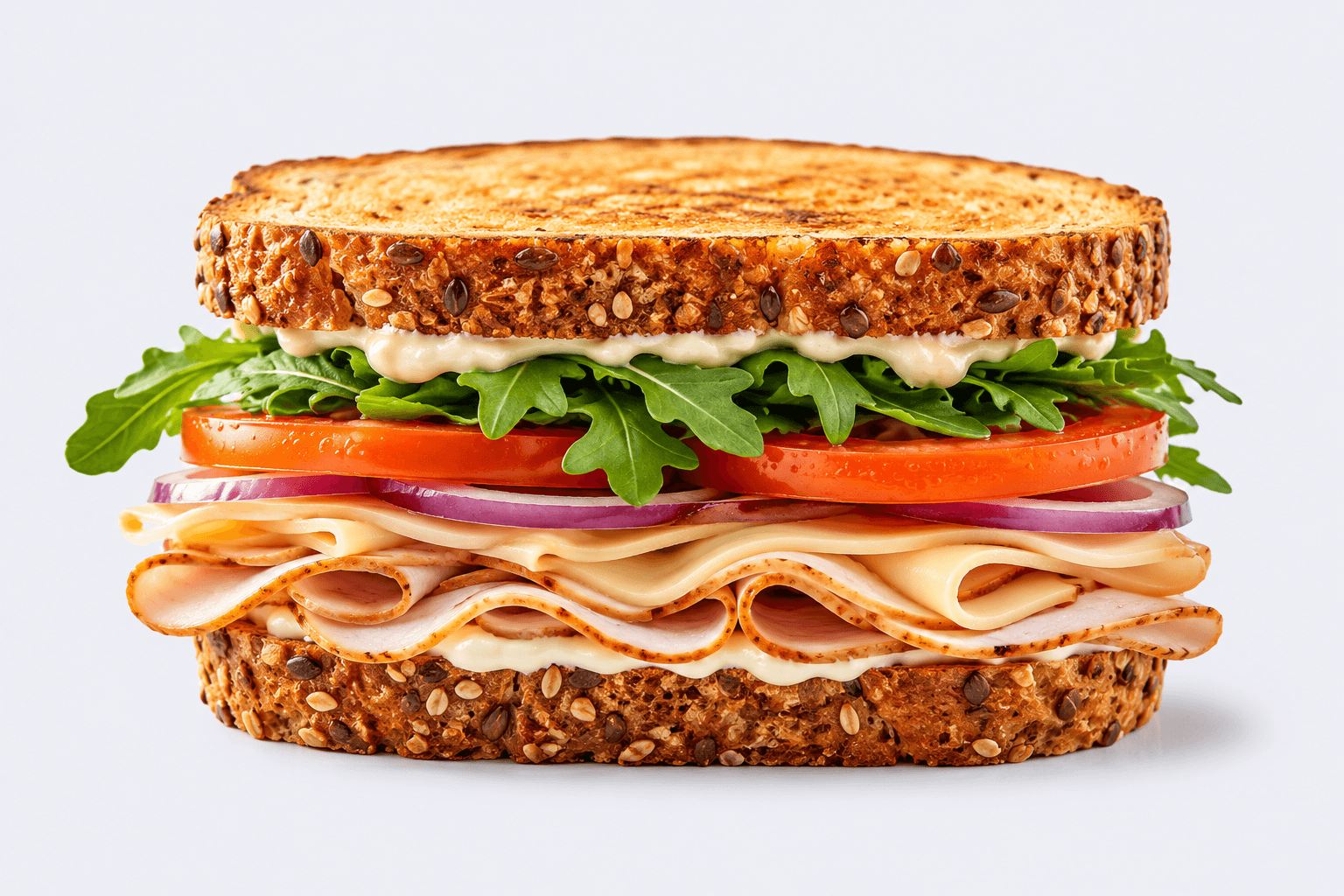
Stop Dumping. Start Sandwiching.
By Lior Student · Founder & CEO, Make a Point
Most people think messaging is about what you know. It's not. It's about how you organize what you know — so your audience actually gets it, believes it, and does something with it.
THE PROBLEM
You Have Too Much to Say. That's the Problem.
I've worked with some very smart people. Product managers who know their product inside out. Executives who've been in the industry for decades. Founders who can recite every feature, every data point, every competitive advantage.
And too often when they open their mouths? It all comes out at once.
Data. Background. Context. Features. Benefits. History. Roadmap. All in one giant, undifferentiated pile.
That's not a message. That's a data dump. And nobody walks away from a data dump knowing what to think or do next.
Here's what I say every time: your audience doesn't need to know everything you know. They need to know what matters to them, right now, in a way they can actually use.
That's what the Message Sandwich is for.
THE QUESTION TO ASK
What is the minimum they need to hear? Or: what's the minimum needed for the message to land?
FIRST THINGS FIRST
What Even Is a Message?
Stop. Before we get to the sandwich, we need to talk about the ingredient that holds it all together.
A message is not a topic. It's not a subject line. It's not a theme.
A message is the big idea in one sentence. And it has two parts:
The Point — what you want them to know. The feature, the finding, the fact.
The So What — why it matters to them. This is the part most people skip.
The Point + The So What = The Message.

Anyone can state a fact. "Our platform processes data 40% faster." Okay. So what?
That's not a message. That's a feature.
A message sounds like this: "Our platform processes data 40% faster — which means your team stops waiting on reports and starts making decisions in real time."
Now that lands.
MESSAGE CHECK
1 idea, conversational language
1 sentence, short & repeatable
Answers the audience's So What?
THE FORMULA
The Message Sandwich. Three Layers. One Structure.

Once you have your message, here's how you build a sandwich around it. Every single message you deliver — in a meeting, a presentation, a pitch, a conversation — follows this structure.
Lead with the message. Back it up. Close by reinforcing what it means for them. Don't bury the message. Don't add extra layers. Lead with it.
LAYER TWO
Talking Points: This Is Where Most People Go Wrong.
The talking points are your proof. Your evidence. Your explanation. But here's what I need you to understand: they exist to support your message. Not replace it. Not compete with it.
You don't lead with the data. You lead with the message, then you use the data to back it up.
There are four types of talking points. Use them like a toolkit — pick the right one for the right audience.
Stories, Case Studies, Examples, Anecdotes
Analogies, Metaphors, "It's like…"
Quotes, References, From the Media, Predictions
Data, Facts, Statistics, Research

Executives? Lead with a story or an analogy. Engineers? Give them data. Mixed room? Story first, number second.
LAYER THREE
Repeat the So What. Yes, Again.
I know what you're thinking. "I already said it. Do I really need to say it again?"
Yes. You do.
People don't remember as well as you think they do. By the time you've walked through your talking points, they've forgotten what the point was and what it has to do with them. It's your job to close the loop for them. To remind them what you've just shared means to them right now. Repeating the So What grabs their attention and makes what you say land.
IN PRACTICE — ONE SANDWICH LOOKS LIKE THIS
Message: Our onboarding time has dropped by 30% — which means new customers start seeing value in week one, not week six.
Talking Point: Last quarter, one of our largest clients went live in eight days. Their team was fully operational before their first internal review.
Repeat So What: This means you can stop losing customers in the gap between sign-up and first value. That gap closes now.
THE BIG PICTURE
How Does It All Fit Together?
One sandwich is one message. Most presentations have more than one. The Body is made up of Message Sandwiches — one per key message.
The question marks in each sandwich? Those are yours to fill in. That's the work. What's your key message for this audience, in this context, at this moment?

BOTTOM LINE
Structure Isn't a Constraint. It's What Sets You Free.
I've heard every version of this objection. "But my content is complex." "But my audience is sophisticated." My answer is always the same: that's exactly why you need the Message Sandwich.
The Message Sandwich forces you to make a choice. What matters most? What's the point? How do I explain it? What does it mean for them?
ALWAYS ASK
What is the minimum they need to hear? Or: what's the minimum needed for the message to land?
Structure doesn't dumb down your message. It makes your message land — every single time.
Your audience deserves clarity. Your ideas deserve to be absorbed. Stop dumping. Start sandwiching.
Lior Student
FOUNDER & CEO, MAKE A POINT
I'm a messaging specialist who turns messy content into crystal-clear messages. I work with data-dumpers, buzzword-addicts, slide-dependent professionals, and I've-got-no-time executives to prepare them for high-stakes conversations. I challenge, refine, and push until messages are sharp, tailored, and always crystal clear.